MPSC ATP: 148 recommended in revised list, next advertisement awaited
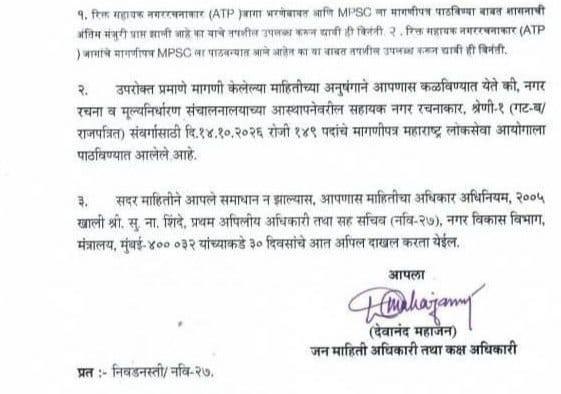
MPSC published the revised recommendation list (Advt. 051/2024, 8 Oct 2026). 149 vacancies confirmed, requisition sent to the MPSC on 14 Oct 2026. Notification date and exam date are unannounced. Use this window to build your base.
Official RTI Reply
MPSC Assistant Town Planner (Group-B): 149 Vacancies Confirmed, Requisition Sent to MPSC on 14 October 2026
Quick answer: start with Planning Theories and Indian Urbanization to build vocabulary, then the MR&TP Act 1966, then UDCPR, and run Valuation alongside all of them. Avoid three mistakes: too many resources, early josh without revision, and taking notes during the live class.

Watch the full free demo lecture on YouTube · More free MPSC ATP demo lectures
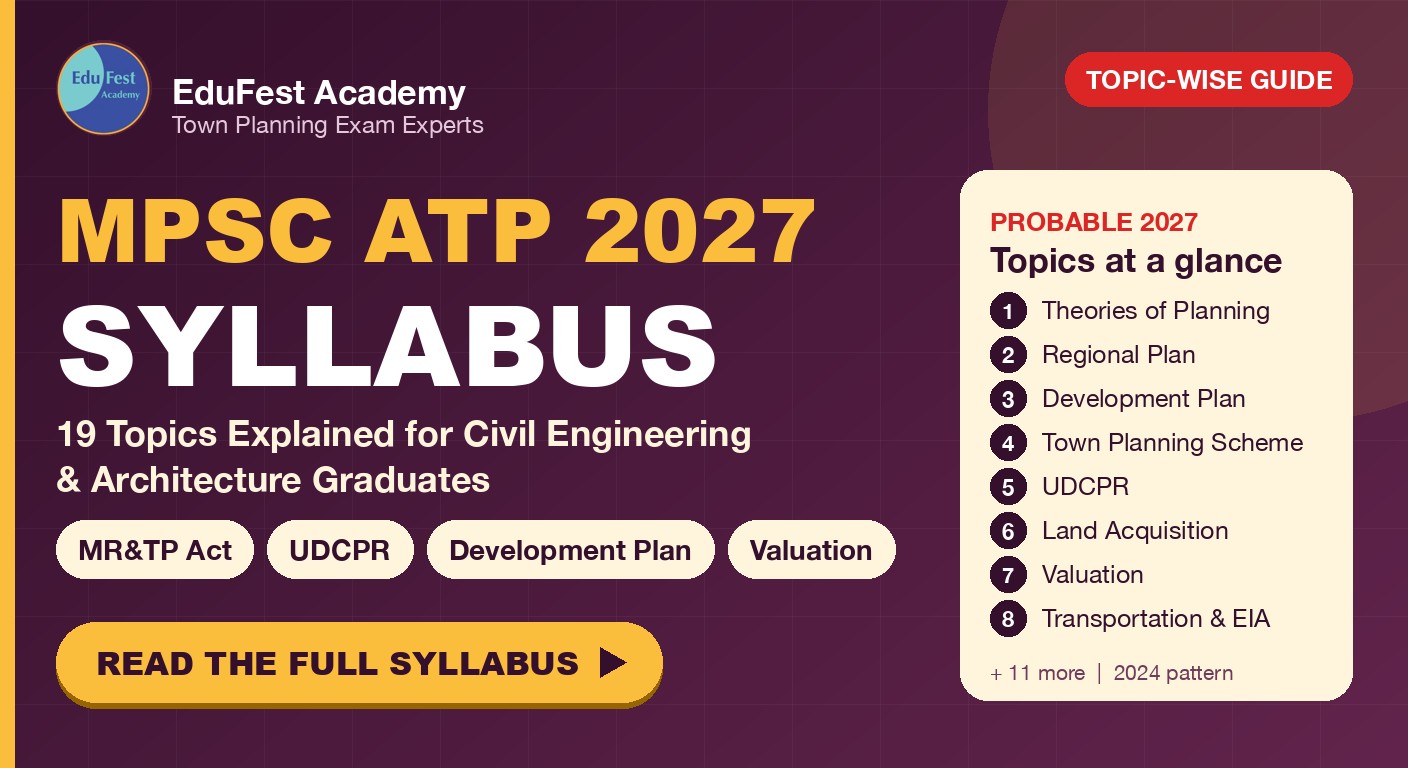
This post summarises the first free demo lecture of the MPSC ATP 2027 batch, taught on 21 October 2026. It is a study plan for the Assistant Town Planner exam, not a substitute for the official advertisement. See the complete MPSC ATP 2027 guide for the exam pattern and the topic-wise syllabus guide for the 19 topics.
3 common mistakes MPSC ATP aspirants make
1. Using too many resources
Town planning has few good books, and the core of the exam is the Act itself. Students often collect many books and PDFs and then cannot revise any of them. Pick one source per topic. In the batch, the faculty share a PDF whenever a topic needs a reference beyond the class notes, so you are not left hunting for sources.
2. Early josh, no revision
In the first month or two the energy is high: solve MCQs from day two and feel the topic is done. When the advertisement arrives, the feeling is "I have already read everything, why read again?". Town planning needs repeated revision, especially time limits and sections of the MR&TP Act. Learn them logically and revise on a schedule.
3. Taking notes during the live lecture
Listen to the live class fully first. Watch the recording the next day and make notes while watching. This way you understand once and write once, instead of doing both badly at the same time.
The right study order, phase by phase
| Phase | What to study | Why this order |
|---|---|---|
| 1 | Theories of Planning, Indian Urbanization | Builds the vocabulary: green belt, counter magnet, neighbourhood, zones, demographic projection. Many civil engineers and architects have never met these terms. |
| 2 | MR&TP Act 1966 | Regional Plan, Development Plan, Town Planning Scheme and the time limits need repeated revision. Study it early so you can revise it many times. |
| 3 | UDCPR | The largest topic, with high weightage. It makes sense only after the Act, development plans and regional plans: where amenity space goes, how much road width, what FSI. |
| Parallel | Valuation and Land Acquisition | Never stop it. Learn depreciation and appreciation first, then tables and methods. Use the official SOR website for rates and the Land Acquisition Act itself, not a guidebook. |
| Light topics | RTI/RTS, schemes and missions (PMAY and PMAY 2.0, AMRUT and AMRUT 2.0) | Easy to do daily. The same schemes carry across with extensions, so they stay relevant. |
| Fillers | Transportation planning, environmental planning | Read when you are bored of the heavy topics. This is planning, not transportation or environmental engineering. |
The reason for the order is simple: a vocabulary from Planning Theories makes the Act readable, and the Act makes UDCPR readable. Reading UDCPR first usually means re-reading it later.
How to study one topic
Learn the topic, read what it was for and where it fails, then solve past-paper MCQs on that topic immediately. Free past papers for many states are on the EduFest PYQ page. A worked example from the same lecture is the Garden City concept.
Next free lecture: Planning Theories, Saturday 24 October 2026, 8:30 PM IST, live and free for everyone on the EduFest Academy app. You get a notification when it goes live, and the Live Lecture section on the app home screen shows it. The recording is uploaded to YouTube afterwards.
The MPSC ATP 2027 online batch
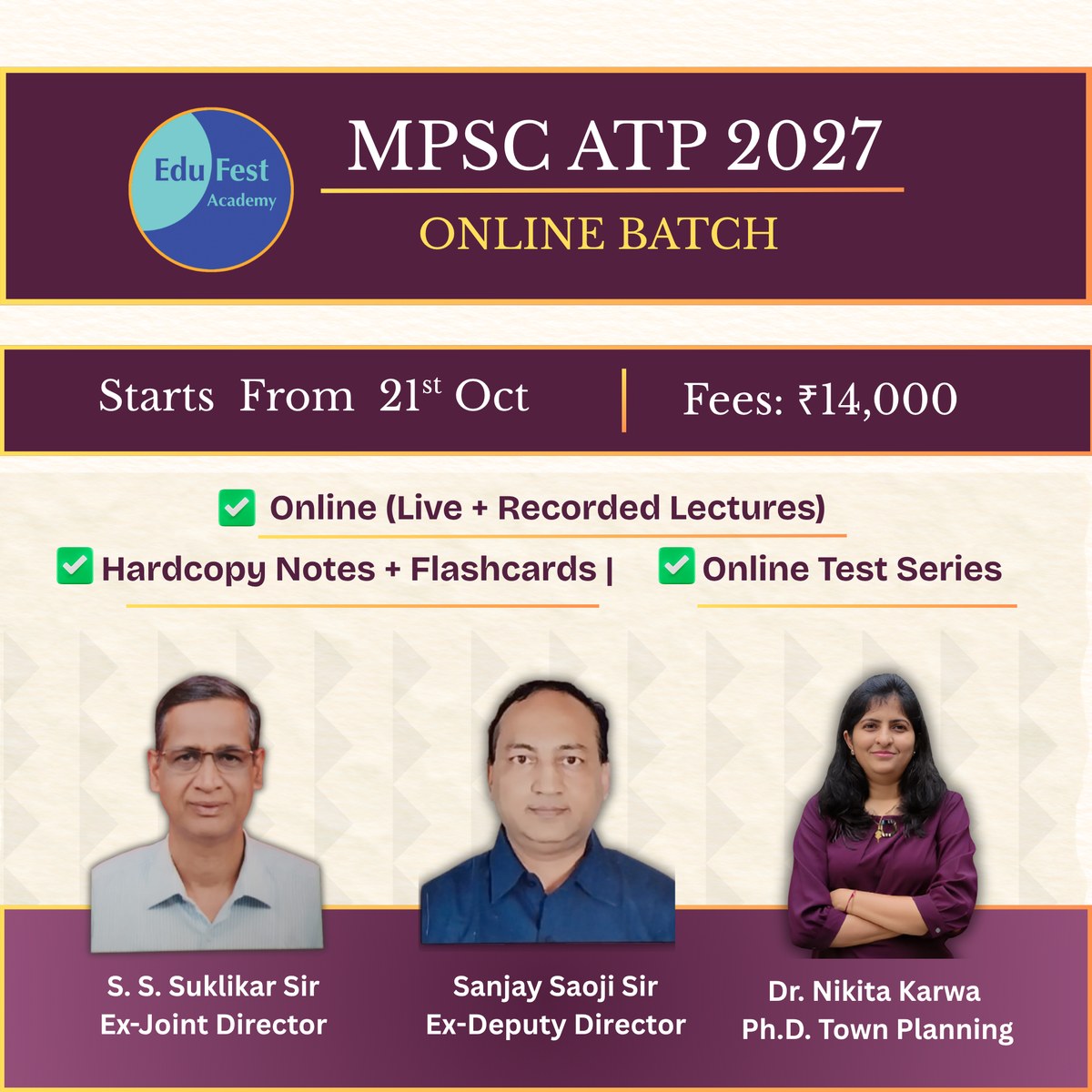
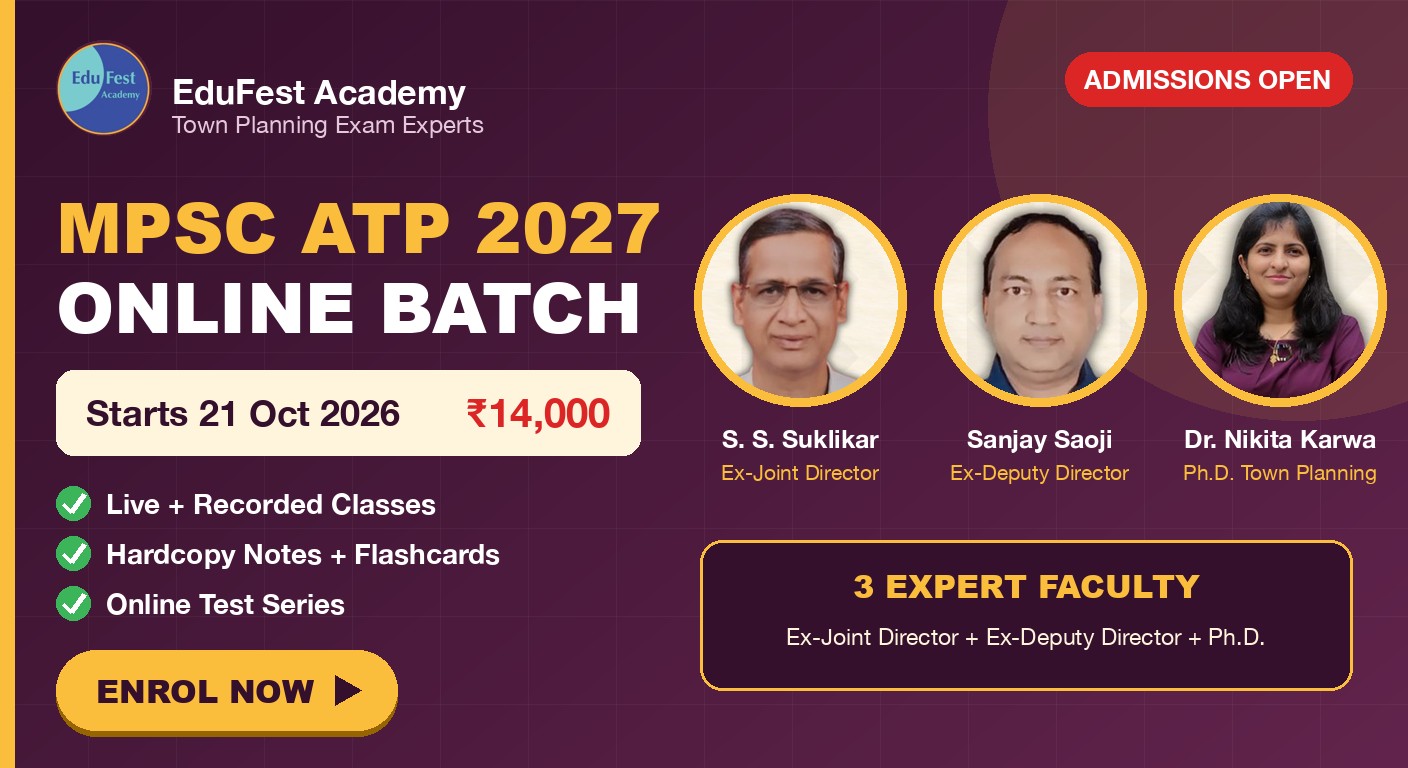
Live lectures every Wednesday and Saturday, with recordings, topic PDFs and MCQ practice. Fee Rs 14,000, payable in two instalments of Rs 7,000; old students get a 25% discount. See the free demo lectures before you decide.
See the MPSC ATP 2027 Online Batch →
FAQs
Which topic should I start with for the MPSC Assistant Town Planner exam?
Start with Planning Theories and Indian Urbanization to build the vocabulary, then move to the MR&TP Act 1966 and UDCPR. Keep Valuation running in parallel.
How many books do I need for MPSC ATP preparation?
Very few. The Acts and regulations themselves are the main source. Use one reference per topic and revise it repeatedly instead of collecting many books.
Should I make notes during the live class?
No. Listen to the live class first, then watch the recording the next day and make notes while watching.
Is Valuation important for MPSC ATP?
Yes. Together with UDCPR and the MR&TP Act it carries much more weightage than other topics. Start with basic definitions, then tables and methods, and keep revising it alongside other subjects.